
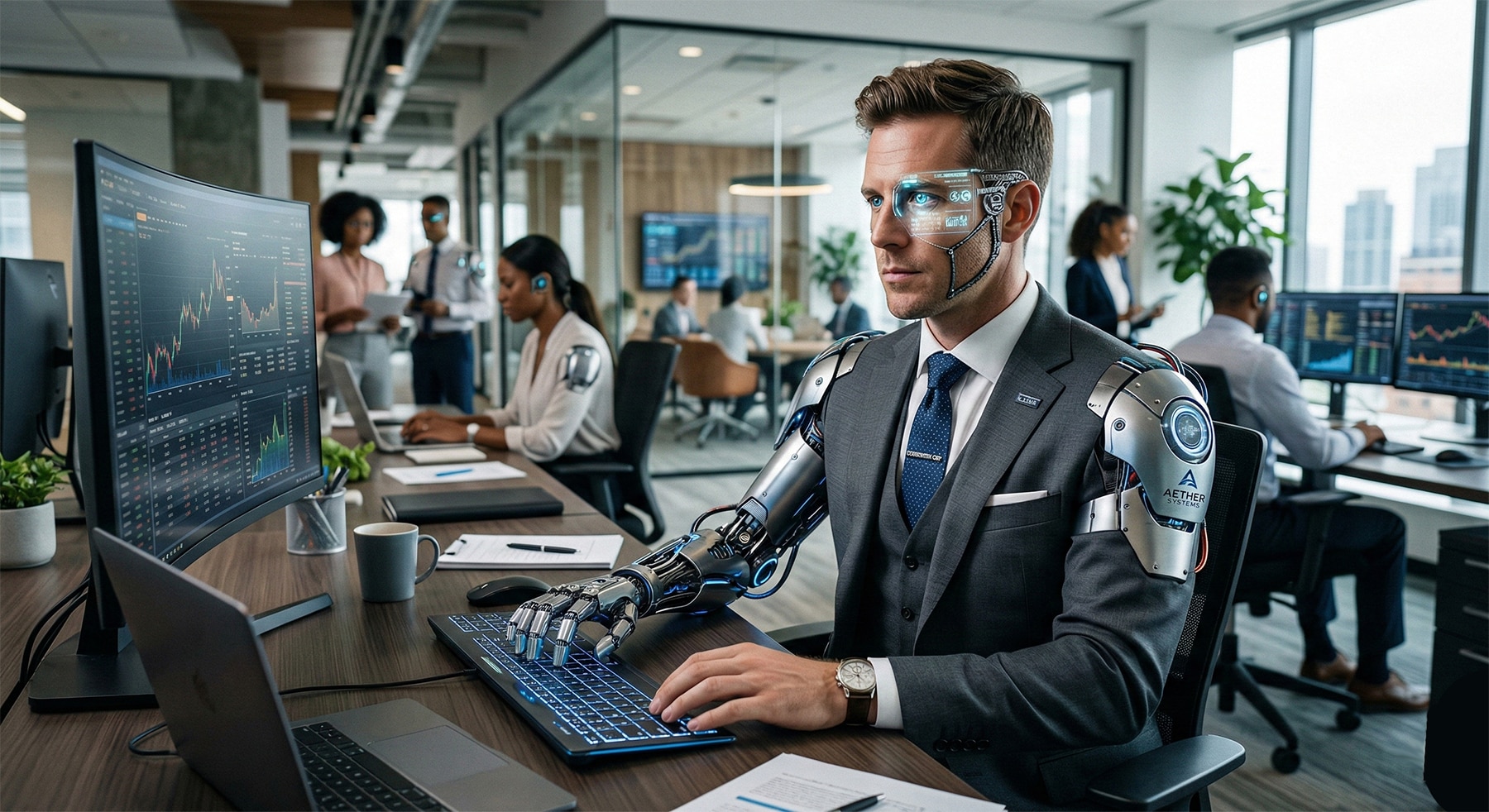
The CI Leader’s AI Playbook: Accelerating the Culture of Kaizen
For decades, continuous improvement (CI) and Lean methodologies have been taught and implemented in a highly analog fashion. When we envision a traditional Kaizen culture, we picture whiteboards covered in metrics, clipboards tracking cycle times, and walls plastered with sticky notes. Lean has historically been slow to adopt new technologies, relying heavily on manual, human-driven processes. However, a massive shift is underway. As artificial intelligence continues to dominate global business conversations, CI professionals are beginning to inject AI into their problem-solving cultures.
Recently, a roundtable of continuous improvement leaders from various industries convened to discuss the practical, day-to-day applications of AI in their field, exploring how it can supercharge Lean efforts and examining the hurdles organizations must overcome to maximize its potential. This post breaks down the core concepts from that discussion, offering a comprehensive playbook for how modern CI leaders are utilizing AI today – and where the industry is heading tomorrow.
Tackling the Low-Hanging Fruit: Streamlining Daily Tasks
The most immediate and accessible applications of AI for CI professionals lie in administrative and analytical tasks. Across the board, leaders are utilizing readily available large language models to dramatically accelerate their daily workflows.
One highly effective use case is the drafting of Training Within Industry (TWI) format job instructions. Traditionally, writing standard work instructions for an unfamiliar process can be a tedious, time-consuming endeavor. Now, CI professionals are utilizing AI tools to rapidly generate these documents. By inputting technical specifications, customer requirements, and basic process parameters into an AI prompt, the system can automatically break the process down into the necessary “whys” and “hows”. This creates a robust initial draft that a human CI leader can quickly review and take to a quality manager for final validation, saving hours of manual formatting.
Beyond drafting documents, AI is increasingly being utilized as a powerful “thought partner”. CI leaders are feeding lengthy articles and industry reports into AI to quickly summarize market intelligence and competitive research. Furthermore, professionals are asking AI to review their own internal reports to identify any missed perspectives or suggest ways to make the communication more engaging for executive leadership.
The analytical capabilities of AI are also being tested against traditional mainstays. Some CI leaders are now using AI to run predictive analytics on massive datasets, subsequently comparing the AI’s output against established statistical software such as Minitab to verify its accuracy and reliability.
Building Private Knowledge Libraries and Data Visualization
While public AI models are useful, the true power for enterprise CI lies in private, secure data environments. During the roundtable, tools that allow users to upload their own source documents to create isolated, private AI libraries were highlighted as absolute game-changers for the industry.
By utilizing these private notebook applications such as Google’s LM Notebook, a CI professional can dump massive amounts of internal files—such as standard operating procedures, historical project data, and technical manuals—into a secure digital space. The AI then generates highly specific outputs based only on the company’s internal documents, eliminating the risk of pulling inaccurate information from the broader public internet.
The applications for this are vast. Leaders can prompt the AI to instantly create specialized job profiles tailored to their exact operations. With enterprise-level integration, these systems can tap directly into internal file directories to generate custom training videos, detailed reports, and even flashcards for new employees. Perhaps the most exciting use case discussed was the potential to film an operator performing a manual task, upload the video into the private AI library, and have the system instantly generate written, step-by-step job instructions based on the visual data.
Additionally, AI is revolutionizing how CI professionals handle data visualization. Creating complex charts used to require hours of manual data sorting, pivot tables, and spreadsheet formatting. Today, CI professionals can simply provide an AI application with raw data and ask it to instantly generate advanced visual tools, such as Pareto charts and cumulative distribution functions, scaled appropriately for immediate use in leadership presentations.
Supercharging Core Lean Tools: Root Cause Analysis and Project Prioritization
As AI automates administrative burdens, it is also being deeply integrated into core Lean tools, fundamentally changing how teams approach problem-solving.
A standout example from the roundtable highlighted the use of AI to facilitate a 5 Whys root cause analysis. During an RCA session, a team hit a wall and could not figure out how to dig deeper into the problem. To overcome this, they typed their initial problem statement into an AI chatbot and simply asked, “What should be the first why?”. The AI provided a highly relevant prompt, allowing the team to continue their investigation.
As any experienced CI professional knows, asking “why” in the wrong way can send an entire team down a massive, unproductive rabbit hole. In this instance, the AI acted as an objective, unbiased facilitator, keeping the human conversation perfectly on track to uncover a solid root cause. This specific application is revolutionary because it empowers inexperienced employees—those who have never received formal Lean Six Sigma training—to conduct robust problem-solving sessions with the AI serving as an expert guide.
AI is also proving valuable in the aftermath of Kaizen events. While activities like Value Stream Mapping still inherently require human, in-person interaction to accurately map out physical flows, the immediate aftermath can be highly automated. Once a team identifies a backlog of potential improvement projects, a project leader can immediately leverage AI tools to help score, rank, and prioritize those activities for the organization’s overarching continuous improvement plan.
The Need for Standardization and Purpose-Built CI Applications
While individual CI professionals acting as “Lean ninjas” can achieve great personal efficiency using general AI tools, creating a true, enterprise-wide culture of Kaizen requires systematic standardization. It is one thing for a single director to use AI effectively; it is an entirely different challenge to get an entire workforce applying AI to problem-solving in a uniform, systematic way.
This highlights the growing need for purpose-built continuous improvement software platforms. To truly scale these efforts, organizations need centralized knowledge management capabilities. A master database designed specifically for CI can store historical project data, root cause analyses, and standard work from across the entire company. When integrated with AI, this centralized system can instantly pull relevant knowledge from a project completed in one facility and feed it directly into the workflow of an employee facing a similar problem in another facility, completely on demand. Standardizing AI usage through dedicated CI platforms such as Impruver ensures that the entire organization is learning, sharing, and improving together, rather than operating in isolated silos of individual AI experimentation.
AI in CI: Cost & Time Savings Calculator
The Future State: AI-Triggered Lean Action
Looking toward the future, roundtable participants identified what may be the most profound upcoming shift in the industry: AI moving from a reactive tool to a proactive trigger for Lean action.
Currently, modern businesses are awash in data. Information flows constantly from ERP systems, Finance, HR platforms, and quality management systems into massive business intelligence dashboards. Unfortunately, opportunities for vital Lean projects are frequently missed simply because human beings cannot process all of this data fast enough. Waiting for monthly or quarterly tier meetings to review metrics is often way too late; by the time the human team recognizes the trend, the opportunity to gather real-time root cause evidence has vanished.
In the future state of CI, AI will continuously monitor these massive data stacks. Instead of waiting for a human manager to notice a negative trend, the AI will autonomously recognize an emerging issue and immediately recommend a targeted intervention, such as launching a DMAIC project or initiating a fishbone analysis, before human leadership even realizes there is a problem.
Overcoming Hurdles: Stable Processes and the Human Element
Despite the incredible potential of AI, CI leaders must remain grounded in reality. The transition to an AI-enhanced Lean culture faces significant hurdles.
Because AI functions as a learning model, it is entirely dependent on the quality of the data it ingests. Intensive human interaction is required upfront to clean up systems, define logical decision trees, and ensure that system connectivity is reliable. If the initial data is untrustworthy, the AI’s recommendations will be entirely useless. Human CI leaders must remain in the loop to establish escalation protocols and determine which specific Lean tools apply to different situations.
Finally, leaders must actively manage the human element and the pervasive fear of technology. It is common for employees on the shop floor to fear that AI implementation is a direct threat to their job security. CI professionals must step up as dedicated change agents. They must transparently communicate that the goal of utilizing AI is to reduce waste and increase overall productivity, which ultimately allows the business to grow and redeploy its workforce into more engaging, value-added areas of development. AI is not a threat to human problem solvers; it is merely an accelerator that removes tedious administrative burdens so people can focus on genuine innovation.
Conclusion: The Evolving CI Leader
The role of the CI leader is rapidly evolving. Rather than executing every project manually, the future CI professional will act more like a pilot in a cockpit, pulling levers and directing powerful technological systems to drive continuous improvement at scale.
To prepare for this shift, CI professionals must take immediate action. Leaders should commit to dedicating time every single week to research new AI applications, test new prompts, and partner with specialized vendors like Impruver to identify tools that solve real business problems. By formally building AI alignment into annual performance objectives, continuous improvement professionals can hold themselves accountable for adopting the tools that will ultimately define the future of the Kaizen culture.
AI acts as an expert, objective facilitator for your teams. For example, during a 5 Whys or root cause analysis, Impruver’s AI can guide users by prompting them with the right subsequent questions to ask. This prevents teams from going down unproductive rabbit holes and empowers even inexperienced employees to conduct robust problem-solving sessions without needing formal Lean Six Sigma certification up front.
Yes. A major challenge in scaling a Kaizen culture is isolated data. Impruver is built with a centralized knowledge management capability that acts as a master database for your entire organization. As your team conducts a new project, Impruver’s AI can instantly pull relevant historical data and past project knowledge from across the company and feed it directly into your current workflow or lean tool on demand.
While general AI tools are great for individual tasks, they often result in “Lean ninjas” working in silos rather than a systematic, company-wide culture. Impruver takes the powerful AI functionalities you might currently piecemeal together from other apps and builds them directly into a centralized Kaizen project management software. This allows you and your colleagues to apply AI systematically across your entire enterprise.
Absolutely. Relying on monthly or quarterly tier meetings to spot negative trends often means you are acting too late, and vital root cause evidence has already been lost. Impruver offers a proactive function where AI monitors the data floating around your company’s tech stack and BI dashboards. Instead of waiting for a human to notice an issue, the tech can recognize an emerging problem in real-time and automatically recommend or trigger targeted lean actions, such as a DMAIC project or a fishbone analysis.
Not at all. AI is an accelerator, not a threat to problem solvers. Impruver views the future of the CI leader as the “pilot of the plane” sitting in the cockpit. Instead of manually executing every single project one at a time, CI leaders will use AI to handle data processing, knowledge management, and facilitation of Lean activities. Human interaction will still be heavily required to define decision trees, manage escalation protocols, and decide which specific tools apply to different situations. AI simply frees up your team to focus on scaling the culture.
To achieve a true “everybody, every day, everywhere” culture of continuous improvement, you need more than just a chatbot. Impruver is a two-part system designed specifically by and for CI professionals: it pairs powerful Kaizen project management software with people development and lean six sigma certification. By integrating AI natively into this system, Impruver ensures your entire workforce is learning, growing, and putting lean principles into practice simultaneously.
