
Primary Challenge:
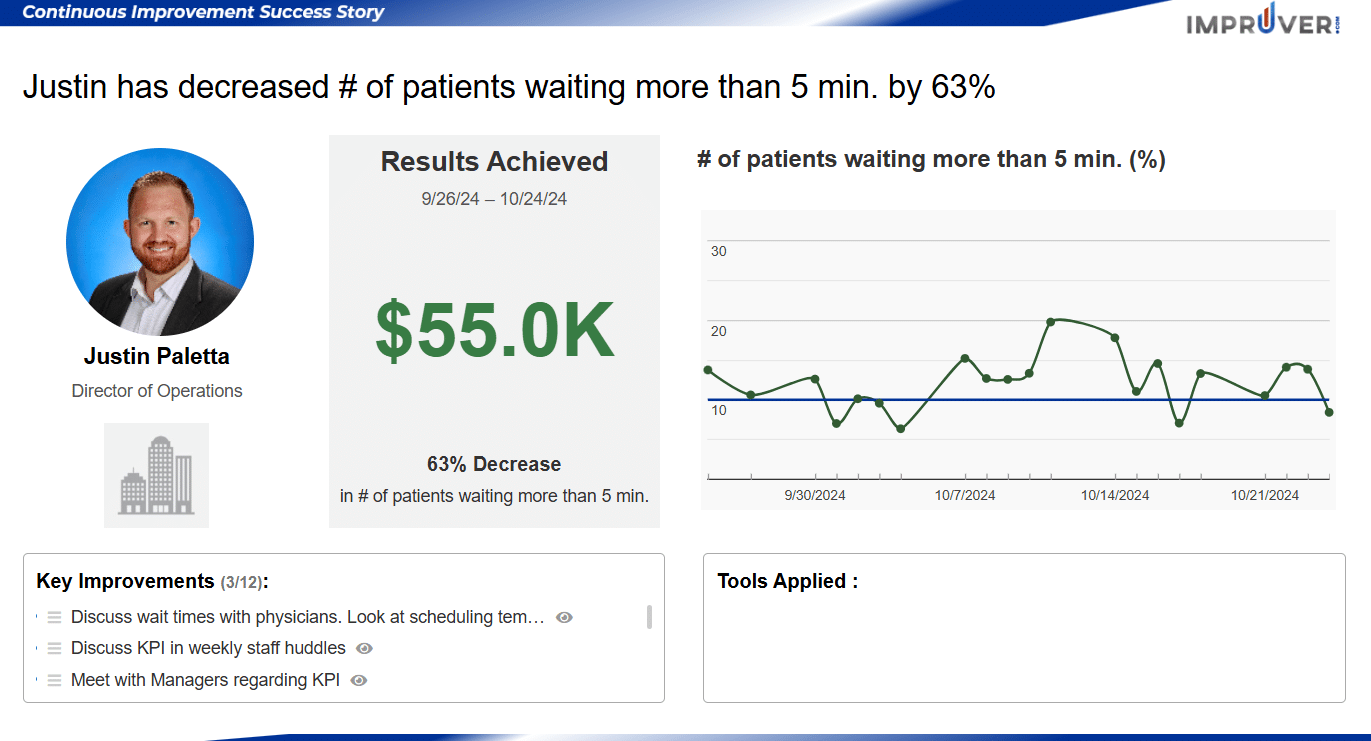
The customer faced a significant operational bottleneck characterized by prolonged patient wait times, specifically a high percentage of patients waiting longer than five minutes for service. This directly impacted patient experience and operational efficiency.
Broader Industry Issue:
Long patient wait times are a pervasive challenge within the healthcare sector, impacting patient satisfaction, clinic throughput, and potentially leading to lost revenue due to patient dissatisfaction or missed appointments. This is a common operational and patient experience issue across various medical and service-oriented industries.
Financial Impact:
The intervention led to an estimated financial impact of $55,000. This figure represents the value generated by reducing patient wait times, likely through improved patient flow, increased capacity, or enhanced patient retention.
Metric Impacted & Results:
The key performance indicator (KPI) successfully impacted was the percentage of patients waiting more than 5 minutes. The Impruver facilitated a 63% decrease in this metric.
Key Improvements:
1. Physician Engagement and Scheduling Optimization: Proactive discussions were initiated with physicians to address wait times, coupled with a review and adjustment of scheduling templates to improve patient flow.
2. Regular KPI-focused Huddles: Weekly staff huddles were implemented to consistently discuss the key performance indicator related to patient wait times, fostering a culture of awareness and shared accountability.
3. Managerial Accountability and Oversight: Regular meetings with managers were established to review the KPI, ensuring leadership oversight and driving accountability for sustained improvement
Other Implications:
While not explicitly detailed in the source, a significant reduction in patient wait times typically leads to enhanced patient satisfaction, improved clinic reputation, and potentially better staff morale due to a more efficient and less stressful working environment. It also signifies a cultural shift towards continuous operational improvement.
